

COMMANDERS COALITION RENAMED FOR
WAR HERO, VETERANS CHAMPION
AND BELOVED SENTINEL CO-FOUNDER
Gammon Irons
TALLAHASSEE, FL — In a move that recognizes decades of extraordinary military service and tireless advocacy for Florida’s veteran community, the Commanders Coalition, an alliance of veterans organizations based in Tallahassee Florida, has been officially renamed the Major John Leroy Haynes Sr. Commanders Coalition. The announcement, made in coordination with Governor Ron DeSantis’s office and state military leadership, honors a Marine Corps legend whose life embodied the motto “Semper Fidelis” — always faithful.
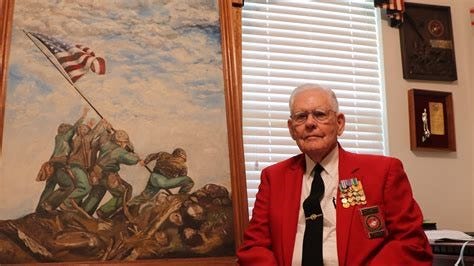
Major John Leroy Haynes Sr., USMC (Ret.), who passed away in November 2023 at age 93, was more than a decorated combat veteran of three wars. He was a man who spent nearly half a century after his military retirement helping fellow veterans navigate the complex bureaucracy of benefits and recognition they had earned through their service. The renaming of Florida’s premier military-civilian collaboration initiative ensures that his name — and the values he represented — will continue to inspire future generations of service members and advocates.

“Major Haynes represented everything this coalition stands for,” said a spokesperson from the Governor’s office. “His life was dedicated to strengthening the bonds between military installations, state government, and the communities that support our service members. This renaming is a fitting tribute to a man who never stopped serving.”
A Boy Who Couldn't Wait to Serve
John Leroy Haynes was born on February 6, 1930, in Madison, Florida, at the dawn of the Great Depression. His family lived on his grandfather’s farm in abject poverty, where every member contributed whatever they could to survive. As a 12-year-old boy, young John worked delivering ice to help sustain his family — sometimes hauling 50-pound blocks up flights of stairs, a Herculean task for a child his age.
The Haynes family was deeply religious and instilled in their children a profound sense of duty to faith, family, and country. John’s mother exemplified this compassion in a simple but powerful way: after every family supper, she would gather whatever leftovers remained and place them in a bag, which she hung on the back door for an elderly black neighbor who was even worse off than they were. In the 1930s, there was no government assistance — only the kindness of neighbors who understood suffering.
This upbringing shaped the man John Haynes would become: tough as nails, when necessary, but never without compassion for those in need.
When World War II erupted, patriotism consumed the Haynes household. John’s father served in the Merchant Marine in the Pacific Theater. His older brother Jim served on a Navy destroyer in the Pacific, where his ship was attacked by a kamikaze plane — an assault that killed 53 men and left Jim blinded in one eye. Another brother, Donald, also served and suffered from depression for years after the war.
Young John participated daily in actions that contributed to the national war effort: creating victory gardens, collecting scrap iron and steel for the “Salvage for Victory” drives, purchasing war bonds, and joining the Civil Air Patrol at age 13. But for John Haynes, these contributions weren’t enough.
At age 13, he attempted to enlist in the United States Marine Corps. He was rejected.
Undeterred, he tried again at age 15 in 1945 — and this time, he succeeded. The circumstances of his enlistment became family legend: John had been staying with his uncle at the time. After he enlisted, his uncle thought he had returned home, while his mother thought he was still with the uncle. Neither had telephones. The truth didn’t emerge until John’s mother received a letter from her son — postmarked from boot camp.
By the time he turned 16, John Haynes was celebrating his birthday in China, serving with the 1st Marine Division.
Three Wars, Thirty Years, Countless Acts of Valor
After completing boot camp, Private Haynes joined the 1st Marine Division in North China in December 1945. The division had been sent to accept the surrender of the Japanese Army, but after that mission was completed, the Marines became embroiled in the Chinese Civil War. They were responsible for keeping the railroad open between North China and Manchuria — a vital lifeline that transported coal from the mines to the south. Without coal, there would be no production, and the people would freeze. Chinese communist forces continually attempted to destroy the railroads and bridges, and young Haynes found himself in the middle of the conflict. He remained in China for two years, participating in what became known as the Chihchiang Campaign.
After his service in China, Haynes was stationed at Quantico, Virginia, with the 22nd Marine Infantry Regiment. In 1949, as a Sergeant E-4, he was selected for duty at Marine Barracks 8th & Eye in Washington, D.C., with the prestigious Marine Corps Ceremonial Detachment. He was promoted to Staff Sergeant E-5 before deploying to Korea.
In Korea, Haynes served with the 1st Marine Division for 13 months as a Platoon Sergeant and acting Platoon Commander. During this deployment, he was promoted to Technical Sergeant E-6. It was in Korea that Haynes experienced the brutality of war firsthand. During a devastating Korean artillery and mortar barrage, he was blown into the air and slammed against a wall, his body peppered with shrapnel. When he regained consciousness, despite his own severe injuries, he dragged another wounded Marine to safety before collapsing. For his actions, he received the Purple Heart and the Navy and Marine Corps Commendation Medal with Combat “V.”
Upon returning to the United States, Haynes was assigned to the Marine Corps Development Center at Quantico, where he served as the NCOIC (Non-Commissioned Officer in Charge) of the Mine Field/Obstacle Breaching Section, testing methods and techniques for breaching minefields and obstacles. During this assignment, he attended Explosive Ordnance Disposal (EOD) School at Indian Head, Maryland — a specialization that would define much of his later career.
Haynes was then assigned to the Marine Corps Engineer School at Camp Lejeune, North Carolina, as NCOIC of the Demolition & Mine Warfare School. This assignment came as a result of a tragic training accident in which three Marines were killed and four seriously injured. The Marine Corps instituted a new requirement that both the Officer in Charge and NCOIC of the Demolitions & Mine Warfare School be experienced combat engineers and school-trained EOD technicians. Haynes fit the bill perfectly.
During his tour at Camp Lejeune, Haynes was selected for Master Sergeant, then First Sergeant, and finally Warrant Officer (with the official designation of Marine Gunner). As a Gunner, he returned to EOD School for recertification in both conventional and nuclear weapons EOD, then was assigned to Fleet Marine Force Western Pacific, serving in Okinawa, Korea, Borneo, Thailand, and the Philippines.
His subsequent assignments included Base EOD Officer at Quantico; Instructor and Officer in Charge of the Nuclear Weapons section at EOD School, Indian Head; and Marine Corps Representative at the Navy EOD Technical Facility. During this period, he was selected for commission as a Second Lieutenant.
Vietnam: The Silver Star
Major Haynes served two deployments in Vietnam, and it was there that his courage under fire earned him the nation’s third-highest combat decoration: the Silver Star Medal.
During one mission, Haynes was tasked with destroying three bombs that had been dropped behind enemy lines but had failed to detonate. If the enemy obtained these bombs, they would use the explosives to fashion deadly booby traps. When Haynes’s helicopter landed, his team immediately came under heavy enemy fire. To make matters worse, a support helicopter was shot down, stranding two pilots.
Without hesitation, Haynes located the downed pilots and got them aboard a rescue helicopter. But as they prepared to take off, it was discovered that a soldier was still missing. Haynes ordered the helicopter to return and exited the aircraft to find the missing man — all while under intense enemy fire. After locating the soldier, they returned to the waiting helicopter and took off again, bullets tearing through the air around them.
It was a miracle that any of them survived. For his extraordinary heroism, Major Haynes was awarded the Silver Star.
In January 1970, then-Captain Haynes was reassigned to Fleet Marine Force Western Pacific, where he served as the 3rd Marine Amphibious Force (3rd MAF) EOD Officer for Vietnam, Thailand, and Okinawa. Upon completion of this tour, he was once again assigned to Naval EOD School at Indian Head, Maryland, as the Marine Corps Representative and Commander of the Marine Detachment.
Major Haynes retired from active duty in 1975 after 30 years of service. His decorations and awards included the Silver Star Medal, Purple Heart Medal, Navy and Marine Corps Commendation Medal with Gold Star and Combat “V,” Navy and Marine Corps Achievement Medal, Marine Corps Good Conduct Medal with three stars, two Presidential Unit Citations, three Navy Unit Citations, Combat Action Ribbon, China Service Medal, Asiatic Pacific Campaign Medal, Korean Service Medal, Vietnam Service Medal, World War II Victory Medal, and the Cross of Gallantry (Vietnam).
The Measure of a Man: Strength and Compassion
Major Haynes’s son, John Haynes Jr., co-founder of the Sentinel newspaper, often reflected on what made his father truly exceptional. Yes, his father was tough — almost impossibly so. Once, while loading hay from a loft, the Major stepped on an unlocked trap door that gave way under his weight. He lunged forward and gashed his shin on the edge of a rafter so deeply that his shinbone was exposed. Blood was everywhere.
His father-in-law wanted to go to the hospital immediately, but the Major refused. He washed the wound with turpentine, ripped up a burlap bag to make a makeshift bandage, wrapped it tightly around his leg, and finished the job before seeking medical attention.
Another time, in his mid-sixties, he was working on a pier in his backyard when he slipped on a slope and his leg buckled underneath him. Despite the pain, he finished the job. When he finally went to the hospital the next day, he was diagnosed with torn ligaments and immediately scheduled for surgery. His son didn’t even know about the injury for months.
But toughness was only part of the story. What truly defined Major Haynes was his compassion and sense of justice.
As a teenager, John Jr. worked alongside his father on their small tobacco farm, hiring a couple of black teenagers from the neighborhood to help with the harvest. One young man, James, was big and strong and worked like a horse. The other, Francis, was short, skinny, and scraggly — he couldn’t come close to matching James’s output despite his best efforts.
One afternoon after the work was done, the Major paid both young men in cash. Hand-cutting and hanging tobacco in August was hot, exhausting work, and their pay was well earned. John Jr. was surprised to notice that both were paid the same amount despite the obvious disparity in their performance.
When he asked his father about it, the Major told him to get in the truck. They drove about a mile down a back road that bordered their property, and the Major stopped near an old shack that was falling apart — barely fit for human habitation.
“This is where Francis lives,” the Major said. “He may not do as much work as James, but he does what he can, and he really needs the money.”
John Jr. never forgot that lesson, or what it revealed about his father’s character. Major Haynes rejected the notion that traditional masculinity meant suppressing emotion or refusing to show compassion. He believed that true strength meant standing up for those who couldn’t stand up for themselves. He believed that a man’s worth was measured not by how much pain he could endure in silence, but by how much good he could do for others.
Service After Sacrifice: A Second Career Helping Veterans
After retiring from the Marine Corps at age 45, Major Haynes worked for 17 years in the Navy Trident Submarine Program, where his expertise in explosives as a former EOD technician proved invaluable. He served two years at the Naval Sea Systems Command in Washington, D.C., and 15 years as the Naval Sea Systems Command Trident Submarine Coordinator at the Eastern Test Range in Cape Canaveral, Florida.
But even as he worked in the civilian sector, Major Haynes never stopped serving his fellow veterans. He completed his Bachelor of Science degree at the University of Maryland, then earned a Master’s degree at Central Michigan University. And then he dedicated himself to what would become his life’s second mission: helping veterans obtain the benefits they had earned.
For more than 20 years, Major Haynes served as a volunteer Service Officer with the Disabled American Veterans (DAV), the American Legion, and the Veterans of Foreign Wars (VFW). He helped thousands of veterans and military widows navigate the often-Byzantine bureaucracy of the Department of Veterans Affairs. Many times, he helped needy veterans out of his own pocket while they waited for the paperwork he had submitted on their behalf to be processed. He was seldom repaid, but he couldn’t have cared less.
In 2005, Major Haynes retired to Monticello, Florida, where he had spent much of his childhood. He remained active in numerous veterans’ organizations, holding leadership positions in virtually all of them:
· 1978: Deputy District Governor, Lions Club International (Maryland); received the Distinguished Citizen of Maryland Award from the Governor
· 1979: State Commandant, Maryland Marine Corps League
· 1993-1994: All State Post Commander, Veterans of Foreign Wars (Florida)
· 1995: District Commander, Veterans of Foreign Wars
· Two years: National Aide-de-Camp, Veterans of Foreign Wars; served on the National Scouting Committee
· 2006: 1st Vice President, Military Officers Association; Director, Explosive Ordnance Disposal Foundation; Chairman, Charter EOD Memorial Committee
· Multiple years: 3rd, 2nd, 1st, Senior, and State Commandant of the Florida Disabled American Veterans
· 2008: First Chairman of the Florida Veterans Foundation (created by the Florida Legislature)
· Ongoing: Senior Vice Commander, Florida Purple Heart Chapter; State Service Officer
Major Haynes was also the driving force behind the EOD Memorial Wall located at Eglin Air Force Base in Florida. According to the EOD website, the memorial “honors EOD technicians who gave their lives in the performance of their duties. The names on the wall date back to the formation of EOD in World War II.” Every year on the first Saturday in May, the EOD Memorial Ceremony is held to commemorate fallen EOD technicians and recognize the legacy of their service and sacrifice.
Recognition and Honors
Major Haynes’s contributions did not go unnoticed. Over the years, he received numerous honors and recognitions:
· 2012: Selected as Grand Marshal of the Veterans Day Parade in Tallahassee
· 2013: Inducted into the Florida Veterans Hall of Fame
· 2013: Recognized by Worldwide Who’s Who as Executive of the Year representing the veterans services industry
· 2017: Received the Governor’s Medal of Merit from Governor Rick Scott
· 2018: Selected by Governor Scott to serve as Florida’s official representative at the White House signing ceremony for the VA Mission Act of 2018 — a landmark piece of legislation that brought much-needed reform to the Veterans Administration

The VA Mission Act signing was a nationally televised event, and Major Haynes had the opportunity to meet with several high-ranking federal officials, including former Vice President Mike Pence. The Major’s advocacy had been instrumental in building support for the legislation, which improved veterans’ access to healthcare and streamlined the claims process.
In March 2022, Major Haynes received the Medal of Honor from the Daughters of the American Revolution (DAR). He learned of the honor through a letter from Governor Ron DeSantis, who wrote: “Your courage is appreciated. On behalf of all Floridians, let me thank you for your service.” Governor DeSantis declared March 9, 2022, as “Major John L. Haynes Day” for the state of Florida.
The award was presented by General James F. Hartsell, USMC (Ret.), and Florida Chief Financial Officer Jimmy Patronis. In his presentation speech, General Hartsell remarked with a smile: “Major Haynes has failed only one time in his life. That was when he tried to join the USMC at the age of 13.”
A Legacy Written in Law
Major John Leroy Haynes passed away peacefully in his Monticello home on November 14, 2023, at age 93. But his legacy was only beginning to take shape.

In 2024, the Florida Legislature passed House Bill 1329, which officially established and named the state’s veteran oral history initiative as the Major John Leroy Haynes Florida Veterans’ History Program. The program, created within the Florida Division of Arts and Culture, collects, preserves, and shares the firsthand stories of Florida veterans to ensure their sacrifices are remembered by future generations.
The bill was sponsored by Senator Danny Burgess and Senator Jay Collins. Senator Burgess explained the motivation behind the legislation: “When I led the Florida Department of Veterans Affairs under Governor DeSantis, I tried to find Florida D-Day veterans to help us commemorate the 75th anniversary, but it was nearly impossible. That’s when I first started thinking about how we could preserve the memory of our state’s heroes before it is too late and the opportunity to do so is gone forever. Creating the Florida Veterans’ History Program will ensure that we remember the stories, impart the courage, and honor the service of Florida’s veterans. Having the opportunity to not only help establish this program, but to name it after one of Florida’s greatest heroes, like Major Haynes, is truly an honor.”
The program is codified in Florida Statutes § 265.8021 and allows veterans of all ranks and branches to participate by scheduling oral history interviews or submitting written accounts, letters, diaries, and photographs. These stories are featured on the “Stories from Florida’s Heroes” website and the Florida Department of State’s “Unsealed Podcast.”

Also in 2024, a section of State Road 59 in Jefferson County was dedicated as the Major John Leroy Haynes Memorial Highway. The proclamation was approved by the Florida Legislature and signed by Governor DeSantis. In 2025, signs were erected along the route near Lloyd, Florida, ensuring that drivers would see the Major’s name and be reminded of his contributions to the state and nation.
The Major John Leroy Haynes Sr. Commanders Coalition
The renaming of the Commanders Coalition as the Major John Leroy Haynes Sr. Commanders Coalition represents the culmination of these honors — and perhaps the most fitting tribute of all.
The coalition is a key initiative that fosters collaboration between state agencies and military installation leaders across Florida’s extensive defense network. The state is home to numerous major military installations, including MacDill Air Force Base in Tampa — headquarters of the United States Special Operations Command (USSOCOM), which is responsible for directing special operations across all branches of the armed forces.
The coalition’s objectives include:
· Enhancing collaboration between Florida’s executive branch and installation commanders to align state efforts with military needs
· Strategic planning to ensure operational readiness for the nation
· Infrastructure support to maintain and improve military facilities
· Strengthening the economic impact of the military in Florida
· Supporting military families through initiatives like those facilitated by Select Florida
Florida has long prided itself on being one of the most military-friendly states in the nation, and the coalition plays a crucial role in maintaining that status. By bringing together base commanders, state officials, and community leaders, the coalition ensures that Florida’s military installations have the resources and support they need to accomplish their missions.
Renaming the coalition after Major Haynes sends a powerful message about the values it represents. Major Haynes spent his entire life building bridges — between military and civilian communities, between veterans and the resources they needed, between the sacrifices of the past and the responsibilities of the present. The coalition’s mission mirrors his life’s work.
“Major Haynes understood that supporting our military isn’t just about funding and infrastructure,” said a coalition member who worked with the Major on veterans’ issues. “It’s about relationships. It’s about showing up. It’s about making sure that every service member and every veteran knows that their sacrifice matters. That’s what this coalition does, and that’s what Major Haynes did every single day.”
The Impact on Florida's Veteran Community
For Florida’s veteran community, the renaming of the coalition is deeply meaningful. Major Haynes was one of their own — a man who had walked in their boots, who understood their struggles, and who never stopped fighting for them.
John Haynes Jr., the Major’s son and co-founder of the Sentinel newspaper, has received countless messages from veterans and family members his father helped over the years. One letter, which he has never forgotten, came from a veteran who said he had been contemplating suicide before coming across a copy of the Sentinel and reading his father’s veterans affairs column. The information in that column gave him hope and direction.
“That’s who my father was,” John Jr. said. “He didn’t just help veterans fill out paperwork. He gave them hope. He gave them dignity. He reminded them that their service mattered and that they weren’t alone.”
The Major’s daughter, Susan Carabello, who served as the Sentinel’s Wellness Correspondent and is the widow of a 100% disabled veteran, worked alongside her father for many years advocating for veterans. In the obituary she wrote for her father, she described him as representing “the epitome of selfless service to his country and fellow citizens.”
“At age 93, he continued participation in 11 military service organizations and remained active assisting veterans and military widows in obtaining their disability benefits,” she wrote. “His work also included visiting the gravesites of fallen heroes with a group of retired veteran friends.”
The renaming of the coalition ensures that Major Haynes’s example will continue to inspire future generations of advocates and service members. It institutionalizes his values at the highest levels of state-military collaboration.
A Marine to the End
Those who knew Major Haynes often remarked on his unwavering commitment to the Marine Corps motto: “Semper Fidelis” — always faithful. He was faithful to his country, faithful to his fellow Marines, faithful to his family, and faithful to his principles.
Even in his final years, the Major remained active and engaged. He attended veterans’ events, conducted military funerals, and continued to help veterans navigate the VA system. He never sought recognition for his work; he simply believed it was his duty.
When he passed away in November 2023, his family requested that donations be made in his name to the Military Order of the Purple Heart, Chapter 492. A visitation was held at Culley’s Meadow Wood Funeral Home in Tallahassee, followed by a graveside service at Tallahassee National Cemetery, where he was laid to rest with full military honors.
In the months that followed, as the state moved forward with naming the veterans’ history program and the memorial highway in his honor, and now with the renaming of the Commanders Coalition, it became clear that Major Haynes’s influence would endure far beyond his lifetime.
Conclusion: A Life That Defined Service
Major John Leroy Haynes Sr. enlisted in the Marine Corps as a 15-year-old boy who couldn’t wait to serve his country. He retired 30 years later as a decorated war hero and then he spent nearly 50 more years serving his fellow veterans with the same dedication and courage he had shown on the battlefield.
The renaming of the Commanders Coalition as the Major John Leroy Haynes Sr. Commander Coalition is more than a tribute to one man’s extraordinary life. It is a statement of values — a declaration that service, sacrifice, and compassion are the foundations upon which strong military-civilian partnerships are built.
It is a reminder that true leadership isn’t about rank or recognition, but about showing up for others, day after day, year after year, even when no one is watching.
It is a promise that Florida will never forget the men and women who have defended our freedom, and that we will continue to support them and their families with the same faithfulness they showed to us.
Major Haynes once said that he would do it all over again — that he could never have asked for a better career. But for the thousands of veterans he helped, for the state that honored him, and for the nation he served, it is we who could never have asked for a better Marine, a better advocate, or a better example of what it means to live a life of service.
The Major John Leroy Haynes Sr. Commanders Coalition will carry his name into the future, ensuring that his legacy of “service after sacrifice” continues to inspire collaboration, support, and unwavering commitment to Florida’s military community.
Thank you for providing a wonderful tribute and memories of a truly remarkable man. His life's work is a great example for all of us to emulate. I never had the opportunity to meet him, that is my loss. Dennis Hall